
The game Cash or Crash Live carves out its own territory in the world of live game shows cashorcrashcasino.com. Its charm lies in a powerful blend of studio spectacle and game design that makes each round a personal challenge of nerve. This is no a passive spin of a roulette wheel. In this experience, you are in the pilot’s seat, making decisions that directly control what you win. The idea captivates you with an increasing multiplier, then dares you to grab it before a hidden “crash” wipes the slate clean. To maximize your experience, you need to look past the lights and see how it actually works. Let’s break down the rounds, the host’s function, the odds involved, and how players can practically navigate the thrills.
Conclusion: A Harmony of Chance and Decision
Cash or Crash Live is a intriguing combination of absolute luck and deliberate decision. Its workings are structured to craft a tale of rising risk, powered by a transparent RNG and brought to life by a charismatic host. Measuring winning as a fun and possibly profitable session hinges on various elements. It’s less concerned with predicting the random and rather about grasping how the game is built. It demands controlling your funds with discipline and controlling the mental inclinations the game masterfully stimulates. By mastering its stages, understanding its statistical structure, and following a custom strategy, you can alter your experience. You move from confused uncertainty to knowledgeable participation in a remarkably thrilling live game show.
The purpose of the on-air host and RNG
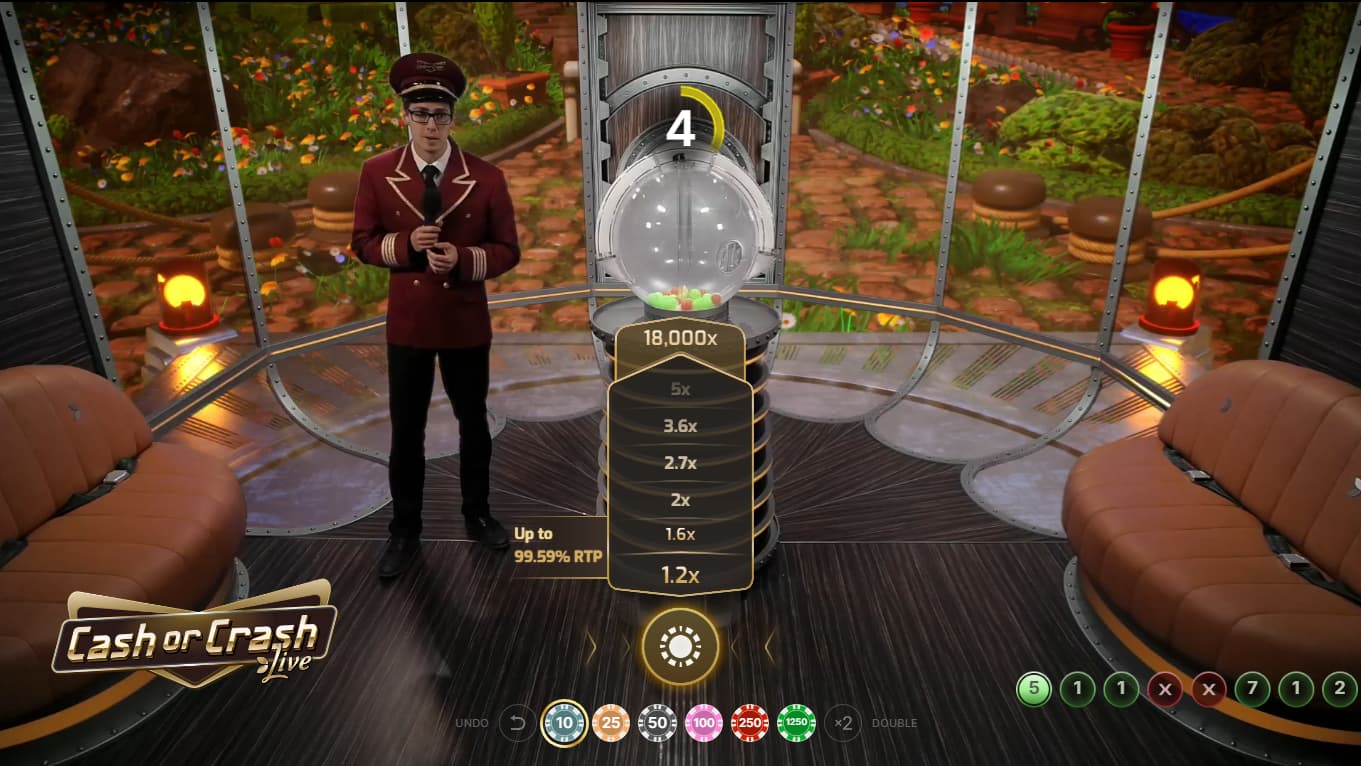
The live host is more than just talk. They establish the game’s emotional pace. While they have no impact on the result, they masterfully build suspense. They call out the climbing multiplier and offer live updates on what percentage of the crowd is cashing out at each level. That social cue can mess with your head. But remember, the host works separately from the game’s engine: the Random Number Generator (RNG). The crash point for each stage is set by a certified RNG the instant the stage begins. This ensures fairness and total unpredictability. The host has no clue when the crash will happen. Their job is entertainment. The RNG’s job is certifiable fairness. This combination merges transparent live action with provably random results.
The Main Goal and Basic Flow
The aim of Cash or Crash Live is straightforward on the appearance. You must decide when to withdraw a growing multiplier before a concealed “crash point” terminates the game and removes your winnings for that phase. Every game starts with players putting bets. A rocket then launches its journey, and a multiplier starts increasing from 1x. The journey has various stages. Before launch, a unknown crash multiplier is determined for every stage, concealed from all players. As the value rises, every player decides to hit “Cash Out,” securing that multiplier on their bet, or to remain. If the rocket hits the hidden crash point prior to a player exits, they lose their wager for that stage. The pattern of hazard and profit happens over multiple phases. Players who survive accumulate their winnings step by step.
Dissecting the Game Phases

Think of the game as a series of different segments, each a new risk. Surviving a crash doesn’t eliminate you. You move to the following stage with your collected winnings intact, then begin the risk process anew on the following part of the rocket’s journey. This framework is everything. It generates a story, with suspense that intensifies as you advance. The presenter amplifies the tension, calling out how many players are still riding the rocket as the multiplier achieves scary heights. Early stages often see conservative plays. Subsequent phases, with their high-stakes multipliers, lure you to bet the winnings you’ve previously won. This division is the core of the game’s excitement. It forces a series of separate, stressful decisions instead of just one.
From Low to High Risk: The Increasing Danger
Notice the color-coded path the rocket takes. It’s a key part of the game’s language. The first part is typically a “Green Zone,” a less dangerous phase where a crash is still possible. Afterward, the rocket might reach an “Amber Zone,” a distinct warning that hazard is increasing. The final stretch is the “Red Zone.” At this point, multipliers look their most attractive, but the chance of a crash is statistically at its peak. Those hues are more than cosmetics. They give you a immediate indicator for the degree of risk at any moment. They transform an abstract probability seem real. Realizing the game is intentionally alerting you about increasing uncertainty is a key piece of game strategy.
Statistical Basics and Volatility
Let’s look at the figures that make the game tick. The crash point for each stage is based on a defined probability model. Common, lower multipliers for instance 1.2x or 1.5x have a high probability of being chosen. Very large multipliers are possible, but they are exponentially less likely. This design maintains the game balanced. The regular, small crashes fund the rare, huge potential payouts. The player payout percentage is a theoretical percentage over millions of games. In a single gaming session, the variance are extreme. You’re not playing against the casino in a traditional way. You are making decisions against a concealed, random value. Keep these key facts in mind:
- Separate Rounds: Each stage’s crash point is its own event. A 1.2x crash in the first stage does not predict the second.
- No Predictive Patterns: The RNG rules out any predictable sequences. Past crashes or big wins have no bearing on the future.
- Casino Margin: The game’s design includes a built-in house edge, which is shown in the publicly disclosed RTP from the provider.
Strategic Frameworks and Player Psychology
No strategy can beat the inherent randomness. But you can use structured methods to handle your bankroll and your feelings. The key trade-off is a exchange. Do you guarantee fixed returns, or pursue explosive profits? Gamblers often adopt techniques like the “Fixed Cash-Out.” In this case, you determine ahead of time to cash out at a particular multiplier, say 2x, in every stage. This seeks steady, small wins. The opposite is the “Let It Ride” approach, where you wager multiple stages for a shot at a huge reward, accepting that crashes will occur. A more calculated tactic is the “Percentage Bankroll” technique, where you change your wager amount based on your present profits. The biggest factor, though, is in your head. Can you fight the “greed factor” when the ratio rises? Can you escape frustration after an early crash? Your best weapon is establishing clear boundaries for yourself before the session even starts.
Frequent Errors to Avoid
Look out for a few typical blunders. The most destructive is “chasing” a failure. This signifies recklessly increasing your bet after a setback, which violates the game’s stage-independent design. Another error is falling for the “hot hand” fallacy, thinking a run of high multipliers is likely to continue. Letting the host’s banter or the moves of other users pull you away from your own pre-set plan is widespread. Also, don’t misread the areas. The Amber and Red Zones are not obstacles to beat. They are alerts that the hazard has spiked. Going into any round without a specific aim transforms the game from a session of decisions into a complete emotional journey. That ride hardly ever concludes favorably.
